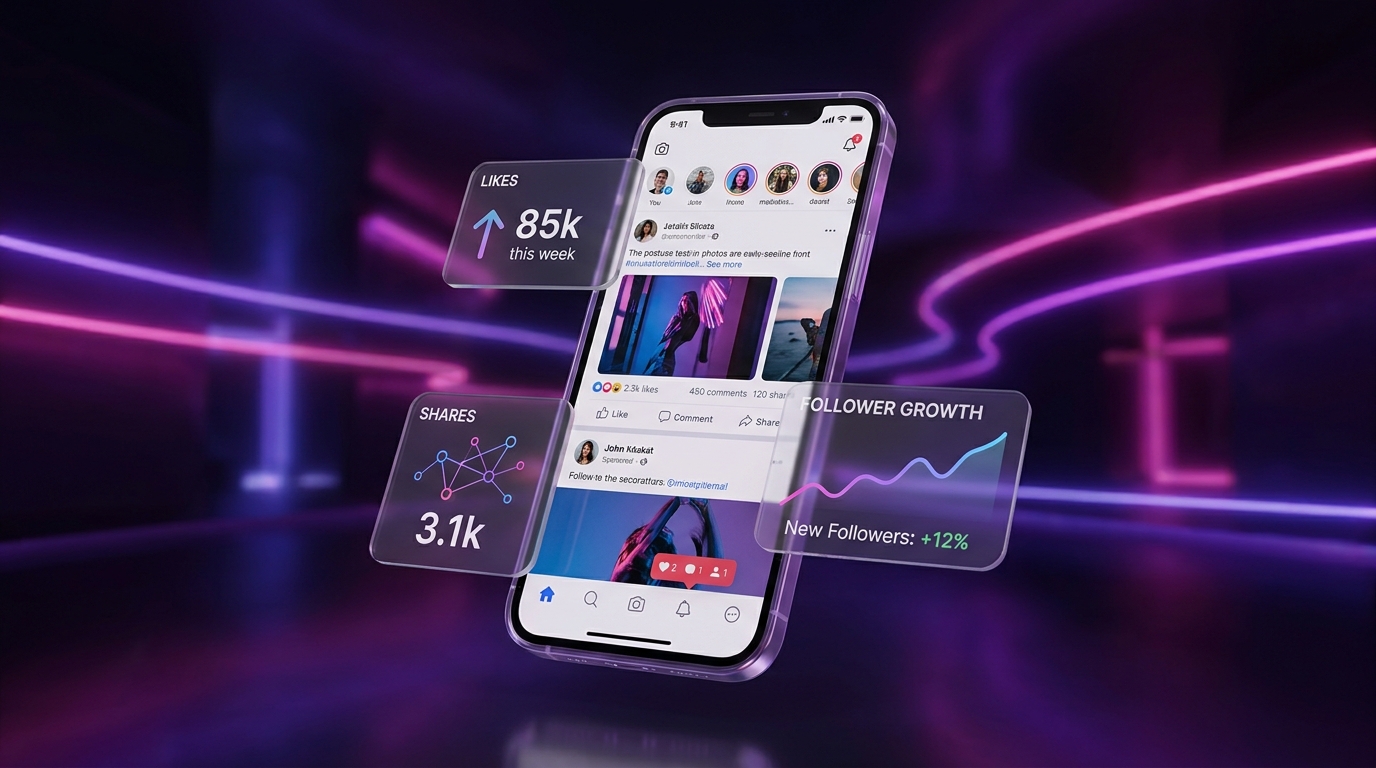
Most businesses fail at social media for the same reason: they post without a plan. They share random content, ghost their audience for weeks, then wonder why they’re not getting results. Social media only works when there’s a real strategy behind it.
Pick the Right Platform First
You don’t need to be everywhere. You need to be where your audience actually is. For B2B and professional services, LinkedIn dominates. For visual brands and lifestyle — Instagram and TikTok. For local businesses targeting broad audiences, Facebook still has solid reach especially in Morocco and the MENA region. Trying to maintain 5 platforms usually means doing all of them badly. Pick 1–2 and commit.
Content That Gets Engagement
The algorithm rewards content that keeps people on the platform. Short-form video wins across every major platform right now — Reels, TikToks, YouTube Shorts get dramatically more reach than static posts. But educational carousels on Instagram still perform well too. The 80/20 rule is a good starting point: 80% value, 20% promotion.
Consistency Beats Virality
One viral post won’t build your business. Consistent posting — 3 to 5 times per week — trains the algorithm to favor your content and keeps your audience engaged over time. Batch-create content on one or two days per week so you’re not scrambling every day.
Engage, Don’t Just Broadcast
Social media is not a billboard. Reply to comments. Ask questions. Start conversations in your DMs. Engage with other accounts in your niche. The more you interact, the more the algorithm pushes your content.
Use Paid to Amplify What’s Already Working
Don’t run ads on content that isn’t performing organically. Let your organic content tell you what resonates — then put budget behind your best performers. Even a small daily budget on a strong post can massively extend your reach to the right audience.
The businesses winning in 2025 are the ones that showed up consistently 12 months ago. Start now, stay consistent, and measure what actually moves the needle.
Post 436 — Paid Advertising: How to Get Real Results from Google & Facebook Ads
Running ads without a strategy is just burning money. A lot of businesses try Google or Facebook Ads, spend a few hundred dollars, get nothing, and conclude “ads don’t work.” The problem is almost never the platform — it’s the approach.
Google Ads vs. Facebook Ads: Know the Difference
Google Ads capture demand. When someone searches “website designer in Casablanca” they already know what they want. Google puts you in front of them at that exact moment — high intent, high conversion rate.
Facebook and Instagram Ads create demand. People on social media aren’t searching for you — you’re interrupting their scroll. Your ad needs to stop them, grab attention, and make them care. It works brilliantly for brand awareness, e-commerce, and reaching audiences who don’t know they need you yet.
Neither is better — they solve different problems. Many businesses benefit from running both with different goals for each.
Define Your Goal Before You Spend a Dirham
What do you want the ad to do? Drive calls? Get form fills? Sell a product? Build awareness? Your goal determines everything: the ad format, the copy, the landing page, and what success looks like. Skipping this is the #1 reason campaigns fail.
The Landing Page Is Half the Battle
Sending ad traffic to your homepage is almost always a mistake. You need a dedicated landing page that matches the exact message of your ad — same offer, same language, one clear call to action. A great ad with a weak landing page will always underperform.
Start Small, Then Scale What Works
Run a small test budget — even 50–100 MAD/day — to collect real data. After 1–2 weeks, look at what’s performing. Then put more budget behind what’s working and cut what isn’t.
Track Everything
Set up Google Tag Manager, Google Analytics 4, and the Meta Pixel before you run a single ad. You need to know which clicks turn into actual leads or sales. Without proper tracking, you’re flying blind.
Paid advertising works. But it takes the right strategy, the right setup, and a willingness to test and iterate. Start with one platform, one campaign, one goal — then grow from there.